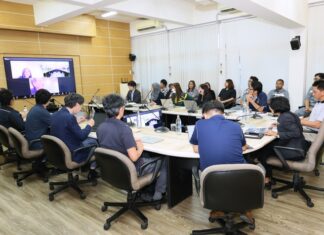



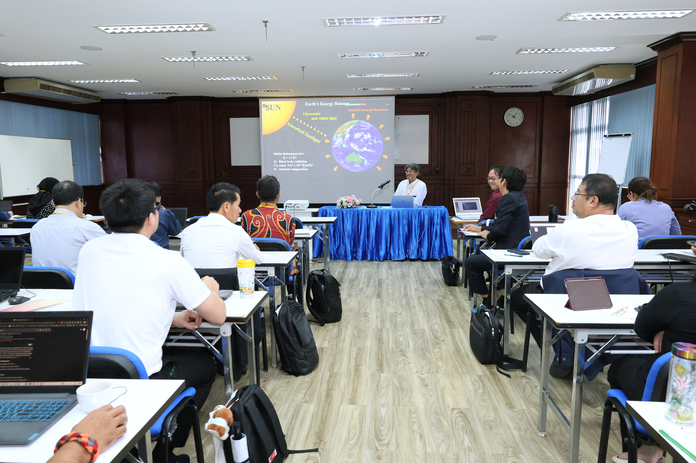
The Southeast Asian Fisheries Development Center, Training Department (SEAFDEC/TD), organized the Regional Training Course on the Introduction of El Niño-Southern Oscillation (ENSO) and Indian Ocean Dipole (IOD) and Its Impacts in Southeast Asia from 10 to 13 November 2025 at SEAFDEC/TD, Samut Prakan, Thailand. This regional training was conducted under the project “Enhanced Marine Research Capacities to Manage Fisheries Resources: Capacity building on marine environment change monitor and assessing their impact on fishery resources” which aims to enhance the capacity of SEAFDEC Member Countries’ researchers in understanding the impacts of marine environmental changes on fishery resources through conduct collaborative research and convening the training course.
The training invited two resource persons from Japan Agency for Marine-Earth Science and Technology (JAMSTEC), including Dr. Iwao Ueki, and Dr. Takanori Horii. They shared their extensive expertise in physical oceanography, especially on the topic of El Niño-Southern Oscillation (ENSO) and Indian Ocean Dipole (IOD) and its impacts in Southeast Asia, to enhance participants’ understanding. A total of 26 participants (15 women and 11 men) attended, representing Brunei Darussalam, Cambodia (online), Indonesia, Lao PDR, Malaysia, Myanmar, Philippines, Thailand, and Viet Nam, as well as the Regional Fisheries Policy Network (RFPN) and staff from SEAFDEC MFRDMD, and TD.
This training contributed to strengthening regional collaboration and enhancing the capacity of fisheries officers and researchers in understanding ENSO and IOD phenomenon and its impact on the sea condition, marine life, and aquaculture together with strengthening the network of researchers in the region. An improved understanding of fishery researchers could support the formulation of informed, evidence-based policies. It will also enable policymakers to develop adaptive and proactive strategies that ensure the sustainability of fisheries, safeguard economic livelihoods, and protect marine biodiversity.