
Regional Training Course for
Fisheries Inspectors in
the Implementation of Port State Measures (PSM)
Date and Venue
at Chatrium Sathon Bangkok
and SEAFDEC/TD, Samut Prakan
Thailand
"Training" Room
Autumn Room
4th Floor
Contact Person
Technical Matters
Ms. Yanida Suthipol
yanida@seafdec.org
Contact Person
Administrative Matters
Mr. Natthawat Chutiponglapat
natthawat@seafdec.org
Global marine fishery production has been declining, with Illegal, Unreported, and Unregulated (IUU) fishing identified as a critical challenge to sustainable fisheries. This illicit activity undermines fisheries management at both national and international levels by circumventing established legal frameworks, leading to the rapid depletion of fish stocks and threatening marine biodiversity. Port State Measures (PSM) have emerged as a pivotal tool in combating IUU fishing by enforcing controls such as pre-arrival notifications, designated port use, vessel inspections, and restrictions on landing and transshipment of fish. These measures enhance the capacity of Port States to detect and deter non-compliant fishing activities, bridging the enforcement gaps often left by flag States. For the Southeast Asian region, strengthening PSM is essential to protecting fisheries resources, fostering regional cooperation, and promoting sustainable fisheries management. Effective implementation of PSM not only curbs IUU fishing but also ensures fair practices for responsible fishers while supporting broader conservation efforts across the region.
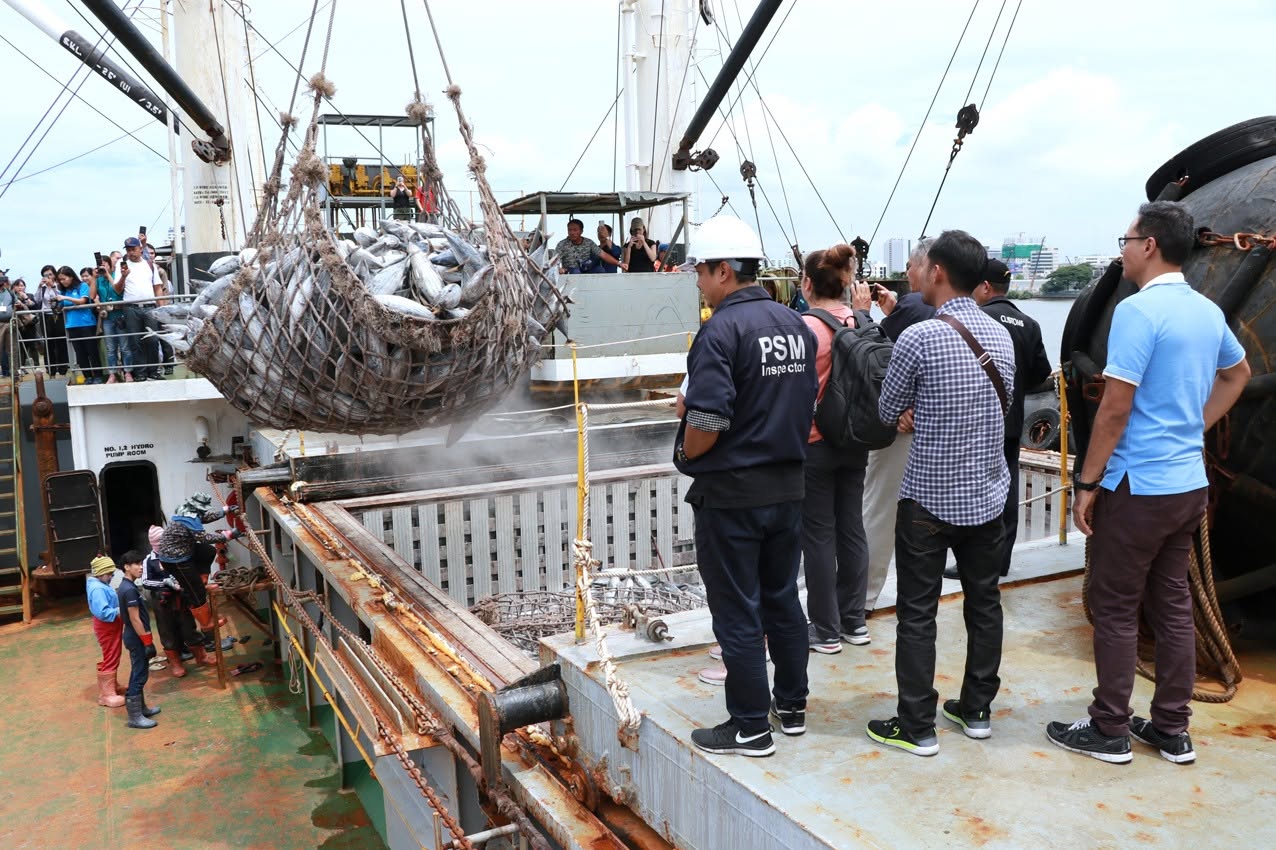
To build up the capacity of participants to better understand techniques for PSM and port control implementation.
To build up understanding of innovative tools analysis with notification and support for PSM and port control implementation.
Increasing knowledge, skill, and experience ofparticipants for inspection to support PSM and port control implementation.
Timetable
29 September - 1 October 2026
29 September 2026 at Chatrium Sathon Bangkok
Time |
Activities |
Resource Persons |
08:30-09:00 |
Registration |
|
09:00-09:30 |
Opening Session |
|
09:30-10:00 |
Refreshment break |
|
10:00-10:10 |
- Introduction of the Participants |
SEAFDEC |
10:10-12:00 |
Challenge and Best Practice on PSM implementation in Southeast Asia |
Mr. Thira Rodchevid, |
12:00-13:00 |
Lunch |
|
13:00–13:40 |
Presentation: Introduction & Background to Port State Measures (PSMs) |
NOAA |
13:40–14:15 |
Presentation: Introduction & Background to Port State Measures (PSMs) (cont.) |
NOAA |
14:15–14:30 |
Quiz on PSMs (Mentimeter) |
JAC |
14:30–15:00 |
Refreshment Break |
|
15:00–15:55 |
Introduction to Open-Source Tools that can be used to Support PSM Global Fishing Watch (GFW) platform including intro to AIS data,Triton Skylight CRAVT - (IMCS) High-level overview of the key information available in each and which elements of Port State measures implementation each tool can support. |
JAC |
15:55–16:00 |
Reflection & Preparation for Day 2 Feedback (keep/ change/ add)Set up participant logins for GFW, Skylight and Triton platforms for those not already done. |
JAC Participants |
18:00–20:00 |
Reception Dinner |
|
30 September 2026 at Chatrium Sathon Bangkok
Time |
Activities |
Resource Persons |
09:00–09:15 |
Recap Day 1 - participants share key takeaways from day |
JAC / NOAA |
09:15–10:00 |
Presentation: Risk and Risk Assessment for PSM |
JAC |
10:00–10:30 |
Guided Demo: Orientation around GFW Platform |
JAC (GFW), Participants |
10:30–11:00 |
Refreshment Break |
|
11:00–12:00 |
Guided Demos: Introduction to Skylight & Triton Platforms |
JAC (Skylight), Participants |
12:00–13:00 |
Lunch |
|
13.00–13.15 |
Quiz (Mentimeter) |
JAC |
13.15–14.30 |
Case Study Exercises Using GFW/Skylight/Triton
Examine specific vessel cases to demonstrate use of the tools in a real-world scenario |
JAC (NOAA assist as needed) |
14:30–15:00 |
Refreshment Break |
|
15.00–15.30 |
Case Study Exercises (cont.) |
JAC/NOAA, Participants |
15.30–15.45 |
Review Day 2/Announcements for Day 3 |
JAC, NOAA |
15.45–16.00 |
JAC-NOAA Post Training Evaluation Survey (or on Day 3) |
Participants |
1 October 2026 at SEAFDEC/TD, Samut Prakan
Time |
Activities |
Resource Persons |
09:00–09:45 |
US Implementation of PSMA |
NOAA |
09:45–10:30 |
Presentations: Case Studies & Examples |
NOAA, JAC (IMCS) |
10:30–11:00 |
Refreshment Break |
|
11:00–12:00 |
Exercises: Investigate the vessel to be used for the boarding scenario using GFW, Skylight, and Triton tools/p> |
JAC/ NOAA, Participants |
12:00–13:00 |
Lunch |
|
13:00–16:00 |
Port Inspection: Practice port inspection on M.V. SEAFDEC |
NOAA, Participants |
15:00–15:30 |
Refreshment Break |
|
15:30–15:45 |
Port Inspection: Debrief Discuss and debrief participants’ experiences from the practical exercise |
NOAA, Participants |
15:45–16:00 |
SEAFDEC Post-training Evaluation |
SEAFDEC |
16:00–16:30 |
Closing Ceremony |
All |
Downloads
Date and Venue
29 - 30 September 2026
Chatrium Sathon Bangkok
291 Soi Naradhiwas Rajanagarindra 24, New Sathon Road, 10120, Bangkok, Thailand
Hotel Website
1 October 2026
SEAFDEC Training Department
Suk Sawat Road, Laem Fa Pha, Phasamutchedi, Samut Prakan, 10290, Thailand
SEAFDEC/TD Website