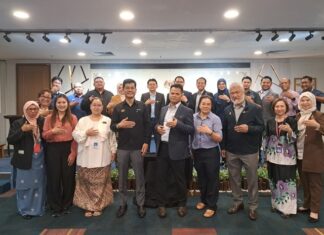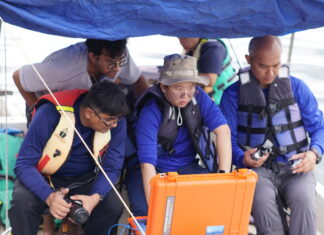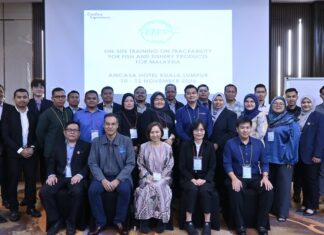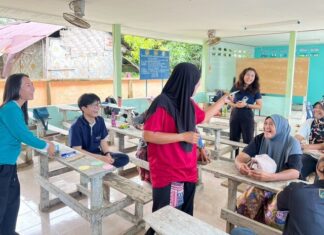



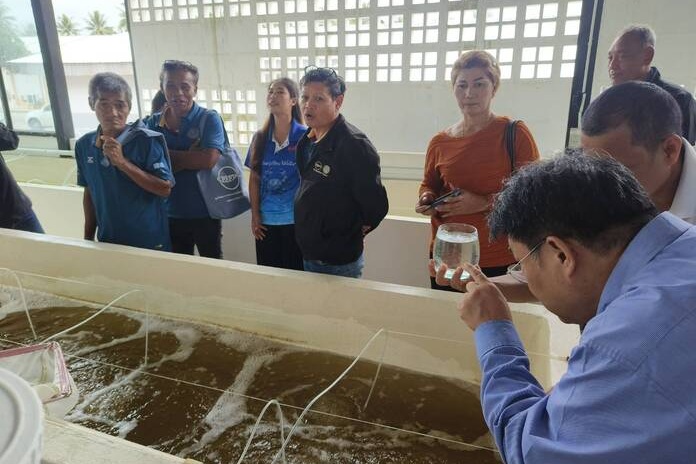
The Southeast Asian Fisheries Development Center/Training Department (SEAFDEC/TD), in collaboration with the Department of Fisheries (DOF) of Thailand, conducted a study visit on “Blue Swimming Crab Management Using Hatchery Technology” from 10 to 12 November 2026 in Surat Thani Province, Thailand. The activity was implemented under the project “Improving Fishers’ Livelihood and Fisheries Co-management in Inland and Coastal Small-scale Fisheries,” supported by the Japanese Trust Fund (JTF). A total of 15 participants (13 men and 2 women), comprising DOF officers, members of the Bangsaphan Crab Bank, private-sector representatives, including Prachuap Port, and SEAFDEC/TD staff, participated in the study visit. The activity aimed to strengthen knowledge and practical understanding of community-based fisheries resource enhancement, particularly blue swimming crab management, while exploring opportunities to strengthen collaboration among fishing communities, government agencies, and the private sector.
As part of the program, participants visited Viya Crab Products Company to observe the production of pasteurized crab meat in cans and learn about the sourcing of raw materials from small-scale fisheries, as well as private-sector involvement in crab bank initiatives. They also visited the Phum Riang Municipality Crab Bank in Chaiya District, Surat Thani Province, to learn about its blue swimming crab resource enhancement practices, particularly nursing crabs from the zoea stage to the juvenile stage before releasing them into natural habitats. Participants observed the hatchery facilities, nursing techniques, and operational arrangements while exchanging experiences on community participation and crab bank management.
The study visit provided valuable technical insights for the Bangsaphan fishing communities, where crab banks traditionally release newly hatched larvae into natural waters. The juvenile nursing approach offers an alternative for improving crab survival before release and strengthening community-based resource enhancement efforts. The knowledge and experiences gained are expected to support the implementation of the Bangsaphan Ecosystem Approach to Fisheries Management (EAFM) Plan and provide useful lessons for strengthening community-based fisheries management and promoting sustainable livelihoods in small-scale fisheries across Southeast Asia.