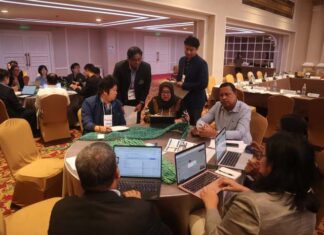



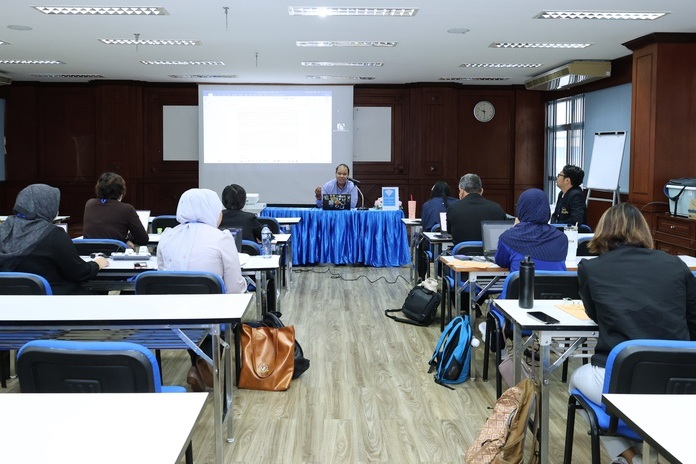
The Southeast Asian Fisheries Development Center, Training Department (SEAFDEC/TD) organized the “Training Course and Inception Meeting on the Vulnerability Assessment of the Impact of Climate Change on Fisheries Resources by an Integrated PSA and ESF Approach” from 3 to 5 November 2026 at SEAFDEC/TD in Samut Prakan, Thailand.
A total of 11 trainees (10 women and 1 man) from Indonesia, Malaysia, and Thailand, alongside SEAFDEC staff from MFRDMD, IFRDMD, and TD, participated in the event. The activity featured lectures and discussions led by four resource persons from SEAFDEC/TD, Kasetsart University, Washington University, and FAO. It aimed to enhance participants’ knowledge and skills in applying the integrated PSA and ESF approaches.
Climate change was increasingly affecting marine ecosystems and fisheries resources, posing significant challenges to fisheries management, particularly in Southeast Asia, where fisheries played an important role in food security, livelihoods, and the regional economy. Given the limited biological, environmental, and fisheries-related information available for many fishery resources in the region, assessing their vulnerability to climate change and identifying those requiring priority attention were essential steps towards developing appropriate management strategies. Thus, an integrated approach that considered both fisheries-related pressures and environmental factors was particularly important for supporting fishery management measures.
PSA (Productivity-Susceptibility Analysis) was used to evaluate the risk to fishery resources from fishing pressure, while ESF (Exposure-Sensitivity Framework) was used to evaluate sensitive species against climate change impacts. This activity also provided opportunities to establish collaboration and initiate studies on climate change impacts on fisheries resources, with a particular focus on identifying priority aquatic species that required urgent management attention and intervention to address the challenges posed by climate change.