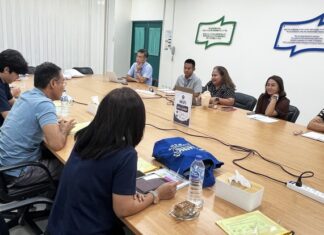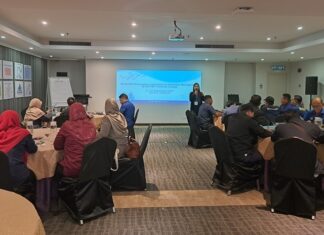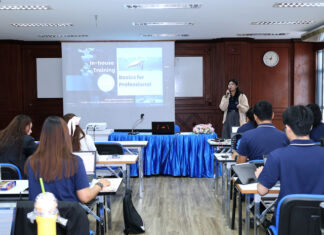



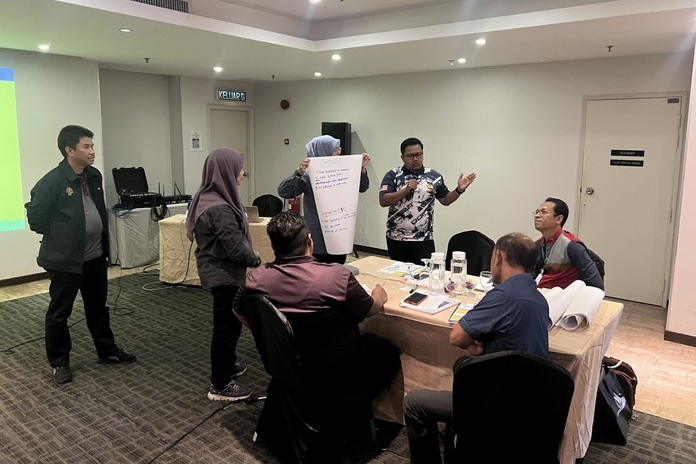
To advance sustainable fisheries management in Malaysia and contribute to broader regional efforts, the Southeast Asian Fisheries Development Center/Training Department (SEAFDEC/TD) conducted the Training of Trainers for Essential Ecosystem Approach to Fisheries Management (TOT E-EAFM) from 26 to 29 September 2026 in Penang, Malaysia. Building on the foundational E-EAFM course, the four-day training aimed at developing local fisheries officers and practitioners as trainers who can further transfer EAFM knowledge and practices.
The training brought together 12 participants (5 women and 7 men), including personnel from the Department of Fisheries Malaysia, managers from the EAFM pilot sites in Perak and Kedah, and four SEAFDEC/TD technical officers. The activity supports Component 1 (Outcome 1.1) of the BOBLME II Project, which promotes the institutionalization of EAFM at the national level, including the management of transboundary fish stocks.
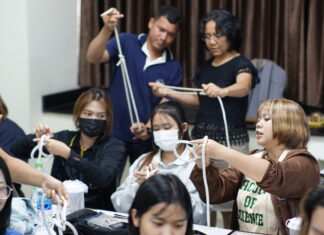
Participants strengthened their understanding of E-EAFM while developing practical facilitation and training skills through individual and group presentations, peer reviews, role-plays, and interactive exercises. These activities prepared participants to communicate EAFM concepts and facilitate learning among fisheries officers, local stakeholders, and fishing communities.
Beyond strengthening Malaysia’s national capacity, the training contributes to regional EAFM capacity in Southeast Asia by expanding the pool of trainers who can share knowledge, experience, and good practices. Lessons from Malaysia can also support future capacity-building in other SEAFDEC Member Countries and strengthen regional collaboration, particularly for shared and transboundary fisheries resources.
By developing trainers who can continue building capacity beyond a single training event, the TOT E-EAFM strengthens national ownership while supporting SEAFDEC’s broader efforts toward participatory, science-informed, and sustainable fisheries management across the region.
This regional activity was conducted under the Bay of Bengal Large Marine Ecosystem Phase II (BOBLME II) Project, implemented by FAO and executed in partnership with IUCN, BOBP-IGO, and SEAFDEC, with funding from GEF and Norad.