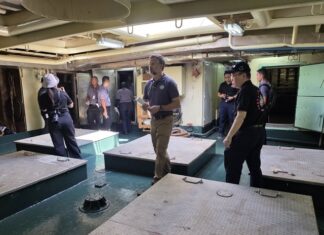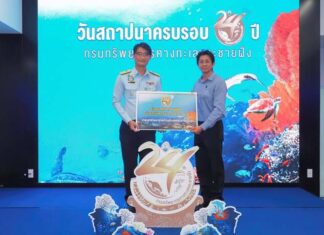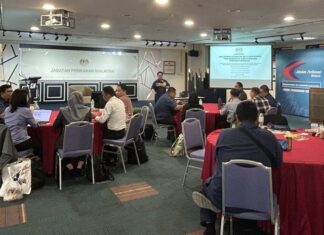



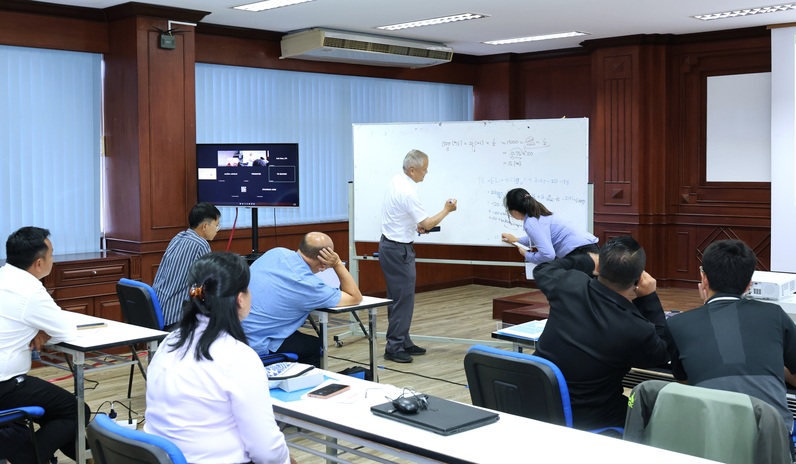
The Southeast Asian Fisheries Development Center, Training Department (SEAFDEC/TD) organized the Regional Training Course on the Basics of Fisheries Acoustics and Practical Survey by Quantitative Echosounder (EK80) from 14 to 22 July 2026. Supported financially by the U.S. Regional Strategic Assistance (RSA), the training took place at SEAFDEC/TD in Samut Prakan, Thailand, and onboard the research vessel M.V. SEAFDEC 2 in the upper Gulf of Thailand. The primary objective of this initiative was to strengthen the capacity of researchers from SEAFDEC Member Countries in effectively planning and implementing fisheries acoustics surveys, which are essential for improving the precision, accuracy, and timeliness of scientific data in fishery resource assessment.
The nine-day training course was structured into three comprehensive parts to ensure both theoretical understanding and hands-on proficiency. It began with a two-day pre-survey session at SEAFDEC/TD focusing on acoustic survey principles and methods, followed by a four-day practical cruise onboard M.V. SEAFDEC 2. During the voyage, participants gained direct experience in EK80 calibration near Khram Island, Chon Buri Province, alongside underwater noise measurement, acoustic data collection, oceanographic observation using a CTD profiler, and biological sampling. The training concluded with a three-day post-survey session dedicated to acoustic data analysis and interpretation using advanced operation software.
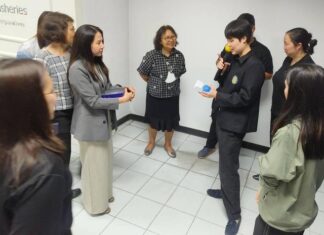
A total of eleven fishery officers from Cambodia, Indonesia, Lao PDR, Malaysia, Myanmar, Philippines, Thailand, and Viet Nam attended the course, with some participating online, alongside two officers from SEAFDEC/IFRDMD and SEAFDEC/MFRDMD, five TD researchers, and one observer from SEAFDEC/MFRDMD. The sessions were led by expert resource persons from the Japan Fisheries Research and Education Agency (FRA) and Hokkaido University. Furthermore, in alignment with SEAFDEC’s commitment to gender inclusiveness and equal opportunity, the course successfully encouraged women’s participation, empowering attendees to apply these critical technical skills to future fisheries acoustics projects across the Southeast Asian region.
Through this training course, participants expected to gain a comprehensive understanding of the fisheries acoustics survey process and to gain practical experience and technical skills applicable to future fisheries acoustics survey projects in the Southeast Asian region.