


From 20 to 21 October 2026, a joint delegation from the SEAFDEC Training Department (SEAFDEC/TD) and Thailand’s Department of Fisheries (DOF) conducted a study visit to two Vessel Monitoring System (VMS) service providers in Jakarta, Indonesia: PT. CLS Indonesia and PT. SOG Indonesia (SkyWave/ORBCOMM). The visit aimed to learn from Indonesia’s experience in applying VMS technology to fishing vessels in the 10–30 gross tonnage (GT) range and to explore potential solutions for monitoring small-scale fishing vessels in Thailand.
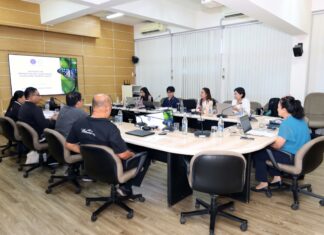
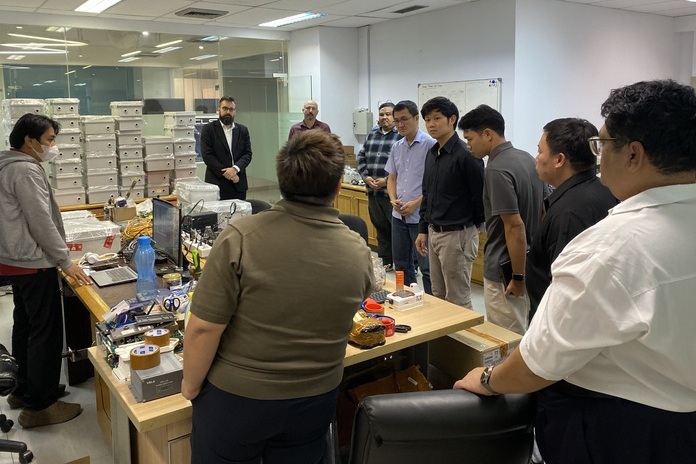
The six-member delegation comprised four DOF officials, including representatives from Thailand’s Fisheries Monitoring Centre, and two engineers from SEAFDEC/TD’s Training and Research Supporting Division. During the visit to PT. CLS Indonesia, the delegation was welcomed by the company’s regional and country management, engineers, and customer service team. Following introductions and a presentation on the joint SEAFDEC–DOF study, PT. CLS Indonesia introduced its NEMO VMS and explained its application on small Indonesian fishing vessels. The delegation also toured the engineering laboratory, examined the equipment firsthand, and exchanged views on the technical requirements and practical arrangements for conducting a field trial in Thailand.
The delegation also met with the regional team of PT. SOG Indonesia (SkyWave/ORBCOMM) and its local Indonesian partner to learn about the SC1000 VMS and the company’s experience in equipping small fishing vessels in Indonesia and neighbouring countries. The Thai delegation discussed the system’s technical capabilities and suitability for Thai fishing operations, raising questions related to local operating conditions, vessel characteristics, and monitoring requirements in Thai waters and at fishing ports.
The study visit provided valuable insights into Indonesia’s ongoing efforts to extend VMS requirements to smaller fishing vessels, offering relevant lessons for Thailand’s future monitoring framework. Discussions with both service providers covered not only equipment specifications and system performance but also the practical challenges of implementation, including fisher engagement, vessel registration, after-sales service, system reliability, and long-term affordability.
Thailand has required VMS installation on commercial fishing vessels of 30 GT and above for more than eight years, while monitoring options for smaller vessels remain under development. The visit forms part of a joint SEAFDEC–DOF study initiated in 2026 to assess alternative VMS technologies for fishing vessels below 30 GT. The findings and experiences gained in Jakarta will contribute to a technical workshop planned for early 2027 and support the preparation of a proof-of-concept trial involving Thai small-scale fishing vessels later that year. These activities are expected to help identify practical, cost-effective, and reliable vessel monitoring solutions suited to Thailand’s fisheries sector.