




- Catch alone is sensitive, it can be induced by various environmental factors and fishing effort (Sutcliffe Jr. et al., 1977).
-
Stoner (2004) found that the fish behavior and life history has played a bid role in the catch fluctuations.
-
The sea urchin catch declined in Japan due to the declining of fishing effort through the number of fishers (NAKANO, 2025).
-
Catch per Unit Effort, CPUE, as the relative unit to catch is necessary to solve this difficulty.
-
Ideally, higher fishing effort causing the lower catch, and vice versa. CPUE can provided less biased stock trend based on this assumption.
-
As the ratio between catch and effort, CPUE can be used as abundance index and able to determine stock status (Marriot et al., 2014).
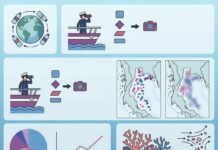
- The figures from Marriot et al. (2014) showed the standardized annual CPUE data along with life history information for the particular species can provide the stock trend for them.
CONCLUSION
- The catch data alone contained uncertainties induced by various factors.
- CPUE can be a good tool to reduce such uncertainties by providing the relative information to stock abundance index.
- A standardized CPUE with life history information can provide a crucial information to fish stock status.
- The data collection for CPUE should be set as the high priority for data collection accordingly.