


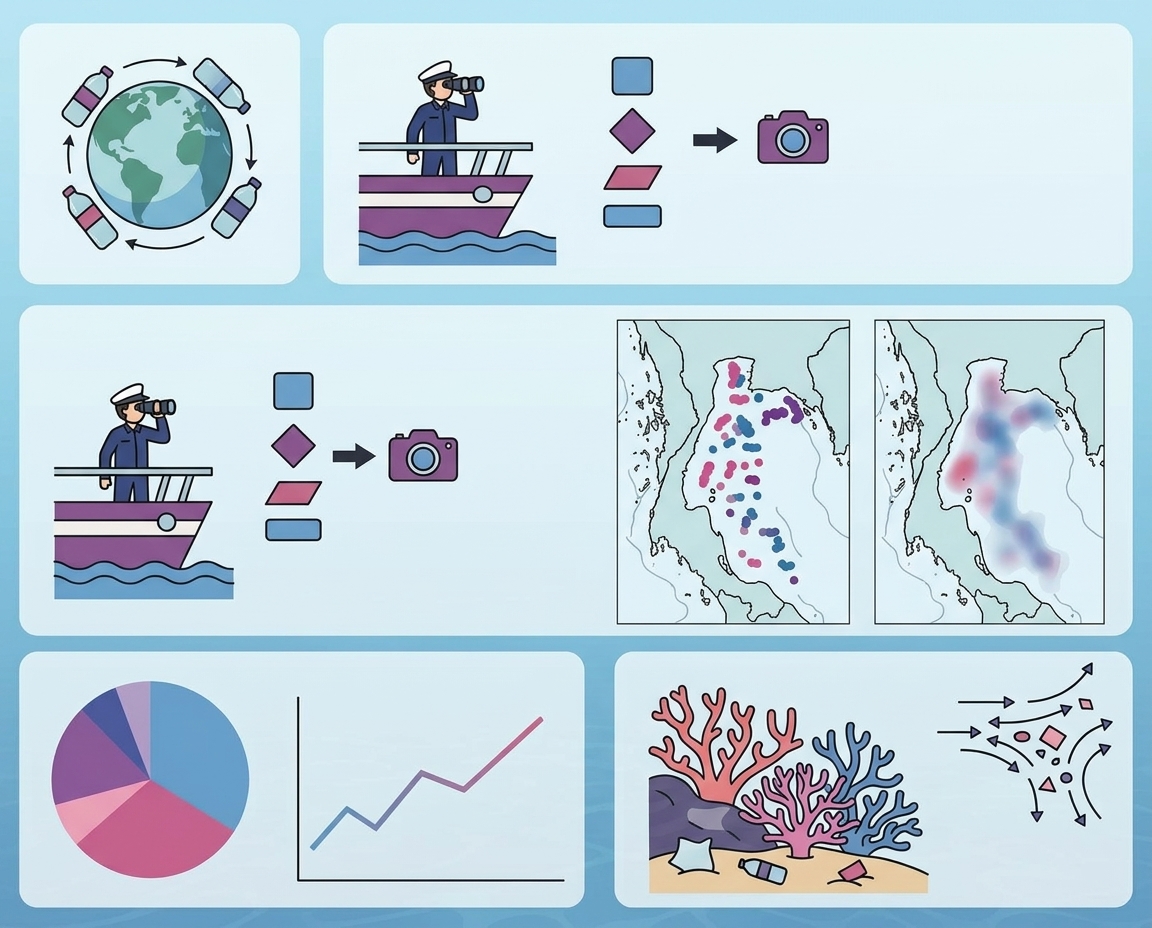
Introduction
- Marine plastic debris is a growing global concern
It threatens marine ecosystems, fisheries, navigation, and coastal tourism.
Floating debris is highly mobile and can accumulate in convergence zones, creating regional hotspots. - Southeast Asia is a major contributor to marine debris
Rapid coastal development, riverine inputs, and intensive fisheries activities increase plastic leakage to the ocean. However, quantitative observations of floating debris remain limited, especially in the Gulf of Thailand (GoT). - The Gulf of Thailand is highly vulnerable
This semi-enclosed basin is influenced by monsoonal circulation, which may enhance debris retention and accumulation.
Objectives
- Quantify floating debris density using a standardized visual observation and distance sampling approach
- Identify spatial hotspots and dominant debris types in the GoT
Materials and Method
Visual observation survey
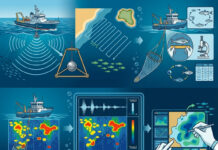
- Floating debris was surveyed along 51 transects across the GoT
- Surveys were conducted during daytime from the bridge deck
- Observers stood on the side with minimum sea-surface reflection
- Debris items were visually recorded along the ship track