



รู้จักวัสดุที่อยู่เบื้องหลังเครื่องมือประมงรอบตัวเรา
(Getting to know the materials behind everyday fishing gear)
จากเส้นใยธรรมชาติ สู่เส้นใยสังเคราะห์ (From natural fibers to synthetic fibers)
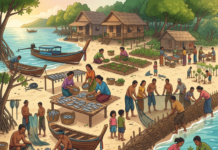
1. เส้นใยธรรมชาติ ฝ้าย ป่าน ปอ และใยมะพร้าว เคยเป็นวัสดุหลักในการทำอวนและเชือก
(Cotton, hemp, jute, and coir were once the main net and rope materials)
ข้อจำกัด: ย่อยสลายง่าย อมน้ำ ต้องดูแลตากให้แห้ง
(Weakness: rot easily, absorb water, need constant drying)
2. เส้นใยสังเคราะห์ ราวทศวรรษ 1950 เส้นใยจากไนลอนและพลาสติกชนิดต่าง ๆ เข้ามาแทนที่เกือบทั้งหมด
(Since the ~1950s, nylon and other plastics have replaced them almost entirely)
จุดเด่น: แข็งแรง ทนทาน ไม่เน่าเปื่อย น้ำหนักเบา
(Strengths: strong, durable, rot-proof, lightweight)
วัสดุสังเคราะห์หลัก 4 ชนิด (Four major synthetic materials in fishing gear)
1. PE โพลีเอทิลีน / Polyethylene / โปลี
แข็งแรง ทนทาน — ใช้ทำอวนลากและเชือกทั่วไป
(Tough and durable — trawl nets and general ropes)
2. PP โพลีโพรพิลีน / Polypropylene / ใยยักษ์
เบา ราคาประหยัด — ใช้ทำเชือกและด้าย
(Very light and economical — ropes and netting twines)
3. PA ไนลอน / Nylon (Polyamide) / PA
เหนียว ยืดหยุ่นสูง — ใช้ทำอวนล้อม อวนติดตา แห และเอ็นตกปลา
(Strong and stretchy — gillnets, cast nets, fishing lines)
4. PES โพลีเอสเตอร์ / Polyester
ทนแดด ยืดตัวน้อย — ใช้ทำเชือกที่ต้องการความคงรูป
(UV-resistant, low stretch — ropes needing shape stability)