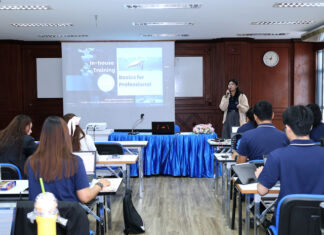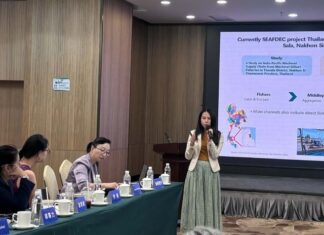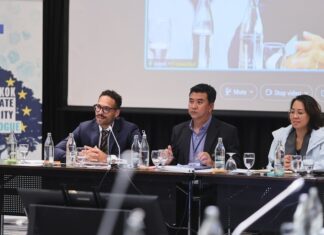



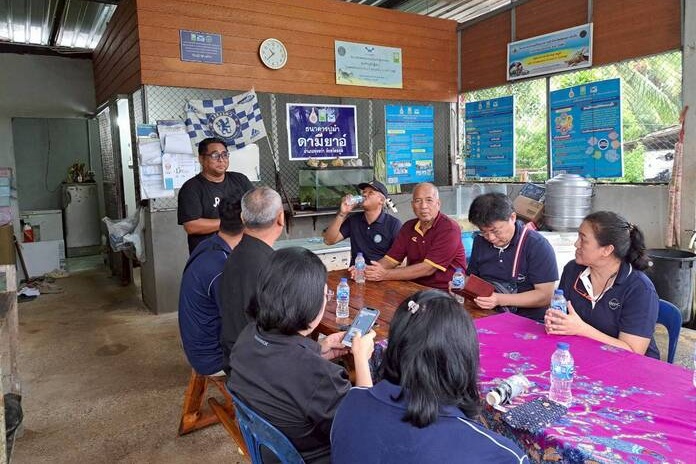
The Training Department of the Southeast Asian Fisheries Development Center (SEAFDEC/TD) organized the EAFM High-level Consultation for Leaders, Executives, and Decision-makers (LEAD-EAFM) on 9–10 June 2026 in Satun Province, Thailand. The one-day high-level consultation brought together leaders, executives, and decision-makers, including Dr. Wantana Chenkitkosol, Fisheries Biologist, Senior Professional Level, and Project Steering Committee (PSC), along with representatives from government agencies, Heads of Provincial Fisheries Offices from Phang Nga and Satun Provinces, Provincial Administrative Organizations, Sub-district Administrative Organizations, as well as representatives from partner organizations, including the Thai Sea Watch Association and the ECCA Family Foundation. The consultation aimed to empower participants to appreciate and endorse the Ecosystem Approach to Fisheries Management (EAFM) approach, while strengthening capacity for sustainable fisheries planning and implementation. The two-day event brought together 33 participants from diverse stakeholder groups, comprising 22 men and 11 women.
On 9 June 2026, EAFM learning materials were introduced and shared with participants to support the application of EAFM principles. This was followed by presentations on key EAFM principles and processes. The planning and progress of the EAFM pilot sites in Thailand, namely Koh Panyee in Phang Nga Province and Rawai in Satun Province, were also presented and discussed among participants. The discussions focused on strengthening implementation mechanisms, enhancing collaboration among stakeholders, and identifying challenges and opportunities for future support, including technical cooperation and funding.
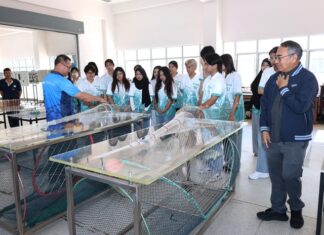
On 10 June 2026, a field visit was conducted to the blue swimming crab bank learning center, the mangrove conservation area, and the Tale of the Backyard Kitchen Model (Rueang-Lao-Khrua-Lang-Ban) in the Rawai community. This activity aimed to provide participants with practical experience in community-based fisheries and coastal resource management initiatives, highlighting the application of the EAFM. The field visit also served as an opportunity to exchange knowledge with local stakeholders, learn from existing management practices, and explore ways to further strengthen the integration of EAFM principles into future fisheries management planning and implementation.
These activities were conducted under the Bay of Bengal Large Marine Ecosystems Phase II (BOBLME II) project, implemented by FAO and executed by IUCN, BOBP-IGO and SEAFDEC, funded by GEF and Norad.