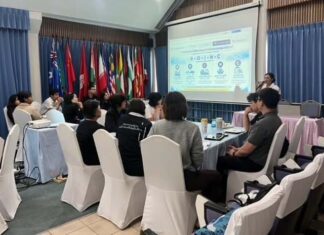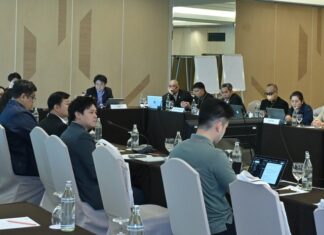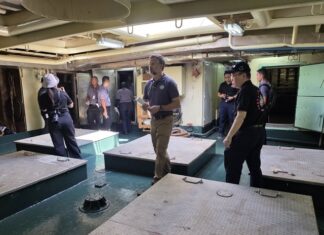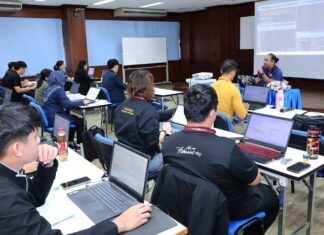


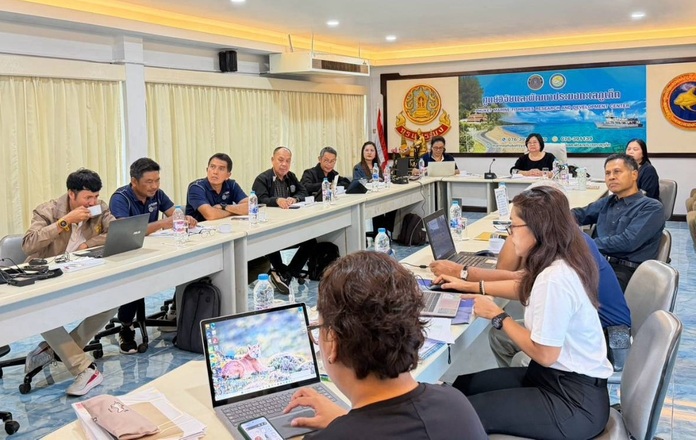
The National Workshop to Share Results and Lessons Learned, and Future Plans for Koh Panyee and Rawai was held on 15 October 2026 at the Phuket Marine Fisheries Research and Development Center, Thailand. The workshop brought together 13 participants (6 female and 7 male) from the Department of Fisheries (DOF), SEAFDEC/TD, local government agencies, community core teams, and EAFM trainers.
The workshop provided an opportunity to review progress, challenges, and lessons learned from implementing the Ecosystem Approach to Fisheries Management (EAFM) in two pilot Fishery Management Units (FMUs): Koh Panyee in Phang Nga Province and Rawai in Satun Province. Particular attention was given to community participation, sustainable fisheries resource management, and practical approaches to sustaining EAFM implementation beyond project support.
Beyond reviewing national achievements, the workshop contributed to regional EAFM implementation by identifying practical experiences, lessons learned, and approaches that could be shared and adapted across BOBLME participating countries. Participants discussed priorities and future actions for 2027, including strengthening community-based fisheries management, improving monitoring and evaluation, and promoting the long-term sustainability of EAFM activities.
The workshop also supported preparations for the upcoming Regional Workshop on EAFM Implementation in Indonesia in November 2026. Results, challenges, and lessons learned from the two Thai pilot sites will be shared with regional partners to facilitate knowledge exchange, promote cross-country learning, and support the wider application of EAFM approaches in the Bay of Bengal region.
Overall, the workshop strengthened collaboration among national and local stakeholders while contributing to regional knowledge sharing and capacity development. The experiences gained from Koh Panyee and Rawai will provide useful inputs for advancing EAFM implementation, strengthening community resilience, and promoting sustainable fisheries management across the region.
These activities were conducted under the Bay of Bengal Large Marine Ecosystems Phase II (BOBLME II) project, implemented by FAO and executed by IUCN, BOBP-IGO, and SEAFDEC, with funding support from GEF and Norad.