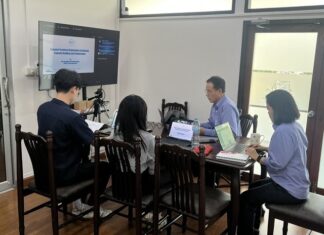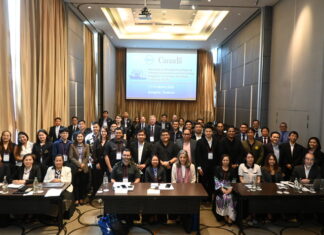



SEAFDEC Training Department (SEAFDEC/TD) has partnered with Norway’s Institute of Marine Research (IMR) to carry out a demonstration survey on to use of Remotely Operated Vehicles (ROVs) for locating and retrieving abandoned, lost, or otherwise discarded fishing gear (ALDFG) in Rayong Province. The pervasive issue of abandoned, lost, or otherwise discarded fishing gear (ALDFG) has contributed significantly to environmental degradation, including habitat destruction, interaction with threatened/endangered species, navigational hazards, and “ghost fishing” where lost gear continues to capture marine life, threatening sustainable fisheries. This initiative, carried out under the “Ghost Fishing in the Global South, Demonstration Project” and funded by the Norwegian Retailers’ Environmental Fund (NREF), aims to tackle ALDFG’s challenges through innovative solutions, capacity-building, and regional collaboration to mitigate the impacts of derelict fishing gear.
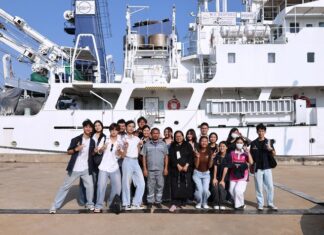
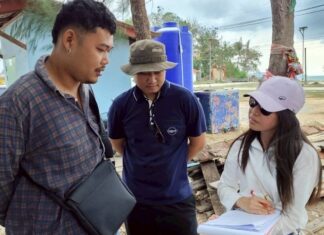
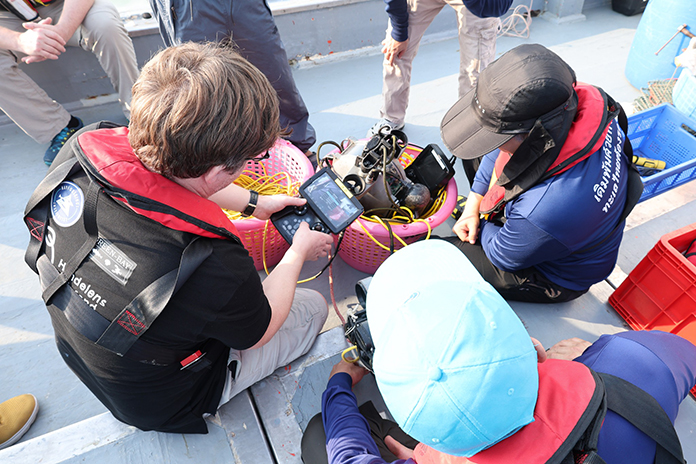
The field trials were conducted from 4 to 6 February 2025, near Samet Island at the cost of Mae Ram Phueng Beach, Rayong Province. The demonstration was conducted using SEAFDEC/TD’s training and research vessel “M.V. PLALUNG” and a small workboat. A side-scan sonar was used to map the seafloor, enabling precise identification of artificial reef locations. Following this, ROVs were deployed to locate and retrieve lost fishing gear. There were ten (10) participants, including six (6) SEAFDEC researchers and four (4) representatives from relevant agencies: Thailand’s Department of Fisheries (2 persons), the Department of Marine and Coastal Resources (1 person), and the Environmental Justice Foundation (1 person). Over the three days of operation, they gained hands-on experience in operating ROVs and recording essential data in the database system. Two types of derelict fishing gears were found and retrieved: octopus longline pots (approximately 150 m in total length) and two fish traps (size 1.0W × 2.0L × 0.8H m). However, due to limited operational time, only one fish trap could be retrieved. The trials demonstrated that ROVs effectively locate and retrieve ALDFG, significantly minimizing environmental disruption and aiding in the restoration of marine ecosystems. The success of this initiative not only highlights technological advancements in managing ALDFG but also showcases the potential for expanding these methods regionally. SEAFDEC plans to disseminate knowledge and techniques for ROV-based gear recovery across Southeast Asia in the future.