


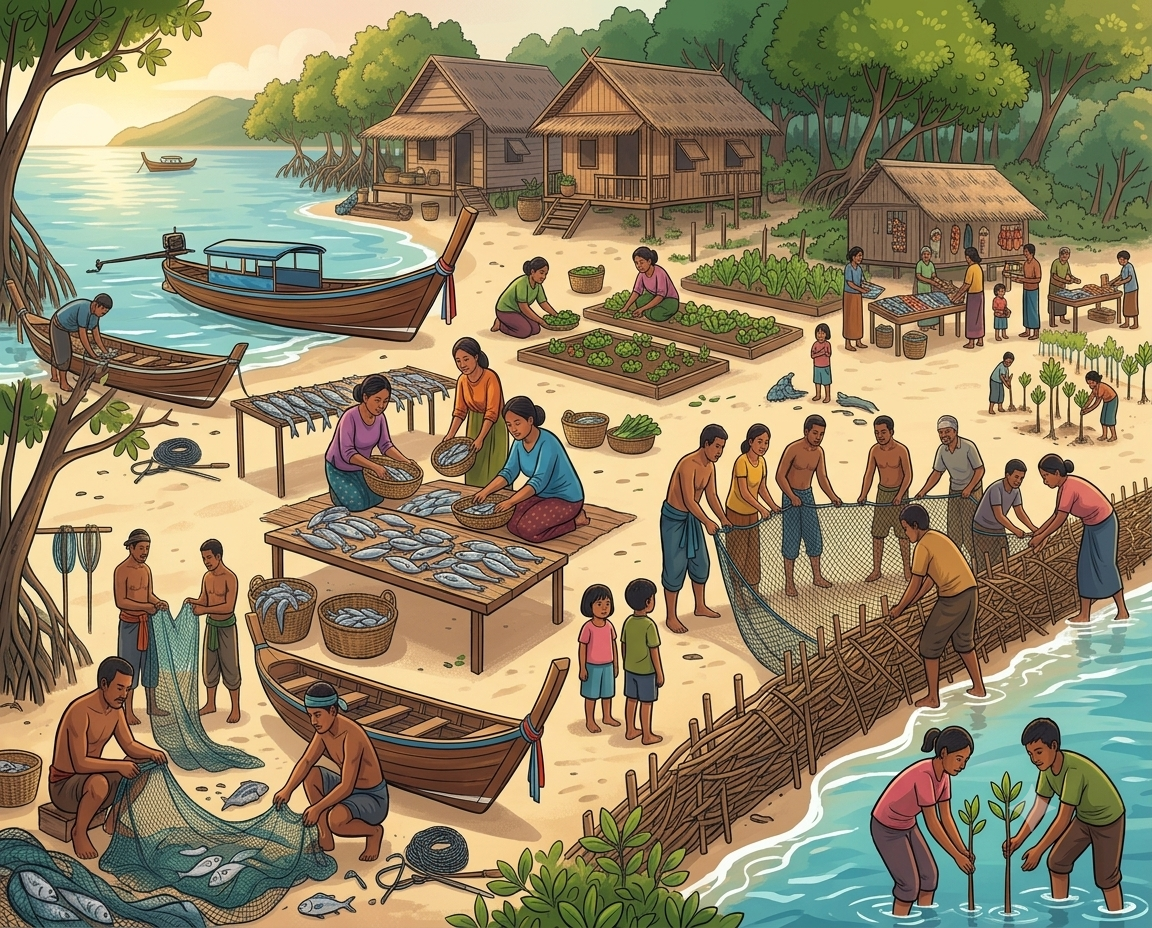
This topic highlights the different roles, vulnerabilities, and adaptive capacities of women and men in Baan Toh Balew, based on surveys and focus group discussions conducted in June 2024 as part of the SEAFDEC resilience capacity building program.
In small-scale fisheries, community resilience refers to the capacity of individuals and communities to anticipate, adapt to, and recover from environmental and socio-economic changes while maintaining their livelihoods and cultural identity (FAO, 2017).
Gender roles shape different vulnerabilities and adaptive capacities as men are mainly responsible for maintaining the quality of water and fish that are more exposed to storms, changing weather, declining fish stocks, and rising fishing costs. However, their knowledge of fishing grounds, navigation, and weather patterns also contributes significantly to community development.
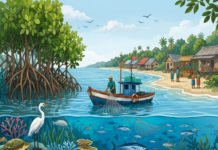
Baan Toh Balew is home to the Urak Lawoi indigenous fishing community, whose livelihoods are closely connected to the sea. Climate change and declining fisheries resources are affecting their marine ecosystems and ways of life, while gender roles and local knowledge continue to strengthen community resilience and adaptation.