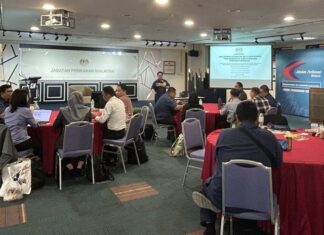


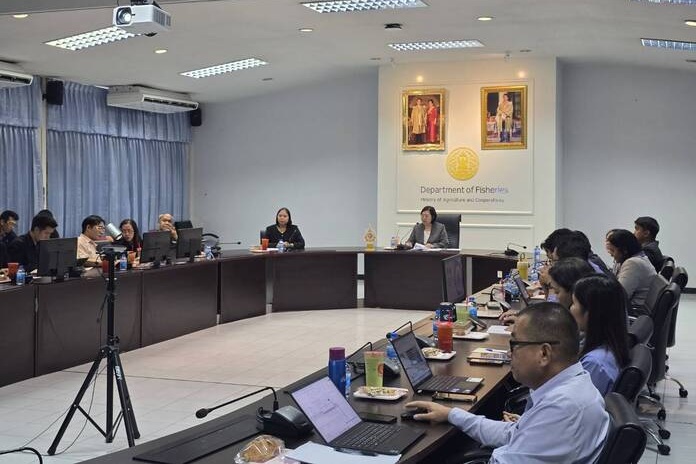
The Meeting on the Preparation of the 2026–2027 Work Plan for the Implementation of the Sustainable Management of the Bay of Bengal Large Marine Ecosystem (BOBLME II) Project was organized by SEAFDEC in collaboration with the Department of Fisheries on 12 May 2026 at the Department of Fisheries, Thailand. The meeting gathered 34 participants
(16 females and 18 males) from DOF Thailand, IUCN and SEAFDEC to discuss the Year 3 work plan under the BOBLME II Project. The meeting was chaired by Ms. Wantana Jenkijkosol, Expert in Fishing Gears from the Marine Fisheries Research and Development Division and Thailand’s Project Steering Committee Member for the BOBLME II Project.
The objectives of the meeting were to report the progress of the BOBLME II Project from January 2025 to June 2026, discuss and finalize the 2026–2027 work plan (July 2026–June 2027), review key challenges and priority activities, and strengthen coordination among DOF Thailand, IUCN and SEAFDEC.
During the meeting, participants reviewed progress under the project components, including Ecosystem Approach to Fisheries Management (EAFM), combating Illegal, Unreported and Unregulated (IUU) fishing, marine pollution management, biodiversity conservation, and community livelihood development. SEAFDEC also presented updates on port waste management and fishing gear marking activities. The meeting further highlighted successful pilot activities at Koh Panyee in Phang Nga Province and Rawai Tai in Satun Province, including crab bank initiatives and habitat restoration efforts.
The meeting concluded with recommendations to strengthen regional collaboration and coordination among implementing agencies. The expected output was the finalization of the 2026–2027 work plan for endorsement at the 3rd Regional Project Steering Committee (RPSC) Meeting to be held on 19–22 May 2026 in Negombo, Sri Lanka.
This activity was conducted under the Bay of Bengal Large Marine Ecosystem Phase II (BOBLME II) Project, implemented by the FAO and executed by IUCN, BOBP-IGO, and SEAFDEC, with financial support from the Global Environment Facility and the Norwegian Agency for Development Cooperation.