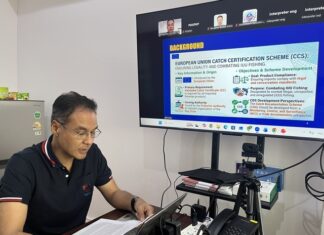



The SEAFDEC Training Department (SEAFDEC/TD) organized the Regional Verification Workshop on Fishing Port Sustainability on 1–2 October 2025 in Phuket Province, Thailand, bringing together technical experts, government officials, and port representatives from Thailand, Malaysia, and Indonesia. The workshop was conducted under the project “Sustainable Management of Fisheries, Marine Living Resources and Their Habitats in the Bay of Bengal Region for the Benefit of Coastal States and Communities (BOBLME II)”, specifically under Component 3: Management of Coastal and Marine Pollution. The overall goal is to transform fishing ports into cleaner, safer, and more resilient infrastructures that support sustainable coastal development and marine resource conservation.
Fishing ports play an essential role in the seafood supply chain, serving as key hubs for fish landing, processing, and distribution. However, they are increasingly recognized as concentrated sources of land-based marine pollution, particularly where waste management systems are inadequate. Common pollutants such as untreated sewage, fish waste, bilge oil, plastics, and nutrient-rich runoff can degrade water quality, threaten marine biodiversity, and compromise food safety. To address these challenges, the workshop initiated a regional study proposal, facilitated national-level knowledge exchange, and laid the groundwork for developing a best practice guide to enhance port hygiene, waste reception, and pollution control standards.
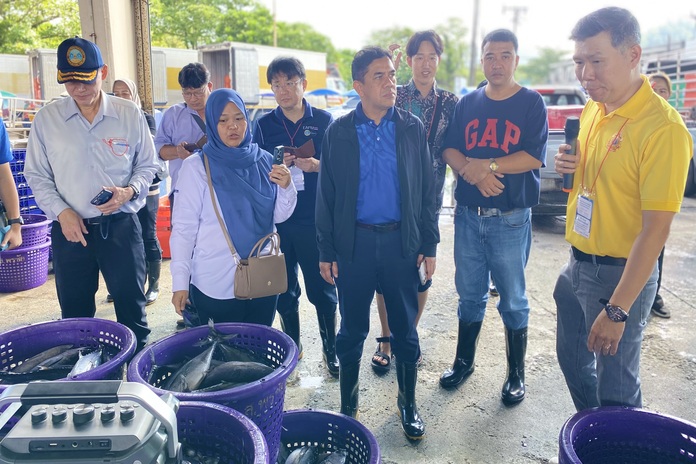
The two-day workshop featured a comprehensive program of technical presentations, policy discussions, and field visits, with contributions from regional and international partners including the Coordinating Body on the Seas of East Asia (COBSEA), the Food and Agriculture Organization (FAO), and the Marine Department of Thailand. Key sessions covered topics such as MARPOL Annex V, which regulates ship-based waste discharge, and integrated strategies for reducing nutrient loading and marine pollution. Participants also visited the Phuket Fishing Port to observe real-time waste handling during fish unloading, assess garbage reception facilities, and review local sewage and solid waste management practices.
The workshop further aimed to strengthen collaboration among BOBLME participating countries through a sub-regional network on fishing port waste management and alignment with global initiatives such as the Global Partnership on Marine Litter (GPML) and the Global Partnership on Nutrient Management (GPNM). These efforts reaffirm Southeast Asia’s shared commitment to sustainable fisheries, marine environmental protection, and harmonized port standards across the Bay of Bengal region.